Log in


California has joined nine other US states in approving balcony solar installations.



Read more of this story at Slashdot.
Broadcasters should be ordered to stop running Trump commercials that appear to violate US laws, consumer advocacy group Public Citizen said today in a complaint to the Federal Communications Commission and Federal Trade Commission. The ads appear to violate laws against using taxpayer funds for propaganda and a law that restricts political activity by federal government employees, the group said.
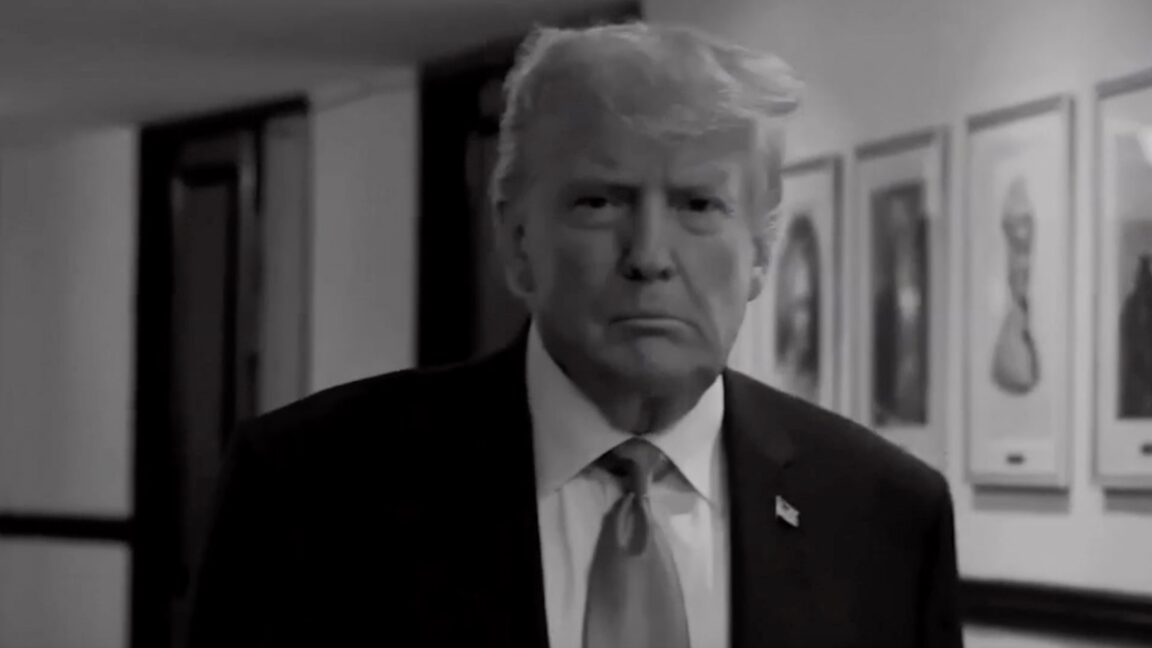
"The most recent of these taxpayer-funded campaign ads, entitled 'The Final Battle,' is a copied version of an ad that the Trump campaign committee issued in the 2024 election," Public Citizen wrote. "In dead serious black-and-white footage, Trump is seen marching down a corridor with a stern look, while the audio blares: 'This is the final battle. With you at my side, we will demolish the deep state. We will expel the warmongers from our government.' A notice at the bottom of the screen announces: 'Paid for by the US government.'"
Trump also says in the ad, "We will cast out the communists, Marxists, and fascists. We will throw off the sick political class that hates our country, we will rout the fake news media, and we will liberate America from these villains once and for all." It uses the same video and audio from an ad Trump used in 2024, with the main difference being that the 2024 version was paid for by Trump's campaign committee instead of the US government. The White House claims its recent ads are public service announcements.
The updated version of the "Final Battle" ad aired during NBC's Saturday Night Live, Fox News Sunday, and several college and NFL football games this past weekend, the Public Citizen letter said. Department of Homeland Security funds were used to pay for the ads, according to a Wall Street Journal report that said, "President Trump personally pushed for the ads and has been involved in their creation." The other ads include one in which Trump says, "America will never be a communist country,” and another in which he says, “the United States of America is the most successful, most accomplished, most exceptional nation ever to exist in human history."
Public Citizen, the nonprofit founded by Ralph Nader in 1971, said it "strongly urges the Federal Communications Commission and Federal Trade Commission to direct broadcasters to stop broadcasting these apparently illegal campaign advertisements." We contacted the FCC and FTC about the Public Citizen letter today and will update this article if either provides any comment.
It's highly unlikely that the FCC or FTC would order broadcasters to stop running the Trump ads. FCC Chairman Brendan Carr's history of attacking broadcasters that Trump dislikes suggests he is more likely to threaten the licenses of broadcasters that refuse to run the ads. Both Carr and FTC Chairman Andrew Ferguson also backed Trump's expansion of power over nominally independent agencies like the FTC and FCC.
Senate Democrats said in a letter to Homeland Security Secretary Markwayne Mullin today that Trump is "illegally using Americans’ tax dollars to fund government propaganda and to put ads from his 2024 campaign back on the air. So far, it appears DHS has dedicated $20 million to this outrageous scheme, tapping funds provided to US Customs and Border Protection in Republicans’ 'One Big Beautiful Bill Act' for commemorative events relating to border security."
The senators' letter cited an estimate from analytics firm AdImpact "that over $1.7 million in federal funds have already been spent simply airing these ads."
Broadcasters would likely be wary of rejecting the Trump ads. ABC owner Disney, which is fighting an FCC proceeding that could block renewal of its station broadcast licenses, said in a lawsuit that its editorial decision-making has been affected by FCC threats.
ABC's The View hasn’t aired any interviews of political candidates since the FCC began the proceeding, and Jimmy Kimmel said he put an interview with a Democratic candidate on YouTube instead of broadcast TV so that local ABC stations wouldn't have to deal with fallout from the FCC. The FCC historically exempted interviews on daytime and late-night talk shows from the equal-time rule, but the Trump FCC has upended that long-standing policy.
The equal-time rule prohibits broadcast stations from censoring or rejecting political ads paid for and sponsored by legally qualified candidates. However, Public Citizen said the rule doesn't apply because Trump is not a candidate and that broadcasters should avoid airing ads that violate federal law:
Broadcasters may be held liable for airing any advertisement that is in violation of federal law. Federal law explicitly prohibits using appropriated public funds for government propaganda, self-aggrandizement, or partisan political advertising. Yet, that is exactly the nature of Trump’s recent campaign ads that began airing on September 23, 2026. Furthermore, Donald Trump is not a candidate for any elective office. The FCC and broadcasters are not constrained by the special rule protecting candidate advertisements.
Defending the use of government funds, the White House claimed the ads are "public service announcements." The ads are "about reminding Americans to love their country and understand what makes it worth defending, at home, at our borders, and abroad," the White House told media outlets.
But the ads do not qualify as public service announcements, Public Citizen said. "They do not refer to any specific governmental program and they do not serve the purpose of informing the public about any specific governmental program," the group said. "Instead, the ads are designed to boost the image and character of Donald Trump right before the 2026 midterm elections, and by association to benefit the president’s political party in the upcoming election."
Public Citizen separately filed a complaint with the US Government Accountability Office (GAO) and Office of Special Counsel (OSC). It alleged violations of "federal laws prohibiting the use of government expenditures for propaganda purposes (5 U.S.C. §3107 and related appropriations laws) and the Hatch Act."
The Hatch Act prohibits federal employees from engaging in some kinds of political activities. It does not apply to the president, but Public Citizen said "the ad was conceived, produced and distributed by White House staff using government resources for partisan purposes."
When contacted by Ars, the GAO did not offer any comment on the Public Citizen complaint. "Our work is done at the request of congressional committees or subcommittees or is statutorily required by public laws, per our Congressional Protocols," the agency said. The OSC confirmed receipt of the Public Citizen letter but did not provide any comment.
US Rep. Jamie Raskin (D-Md.) last week said the Trump ads "may be felony criminal theft and conversion of government property for political campaign purposes," and "a Hatch Act violation for any government employees who worked on it or used government resources to make it. It is blatantly unethical under numerous federal ethics provisions proscribing the use of government resources for political campaigns."
Four Democratic Senate and House lawmakers told the White House in a letter, "The law is not complicated. You cannot use taxpayer dollars for political advertisements." Senate Majority Leader John Thune (R-S.D.) reportedly said that although he likes the Trump ad's message, "It shouldn’t be paid for with taxpayer dollars."
Sen. John Kennedy (R-La.) similarly said he opposes using government money for Trump ads. He has also criticized Kristi Noem, the former secretary of Homeland Security, for a $220 million ad campaign.
"I don't think any public official, including President Trump or Kristi Noem or John Kennedy, should spend public money on private ads for themselves," Kennedy said in a CBS interview. "Now, the White House sees it differently, but I don't... you can't spend public money to promote yourself."
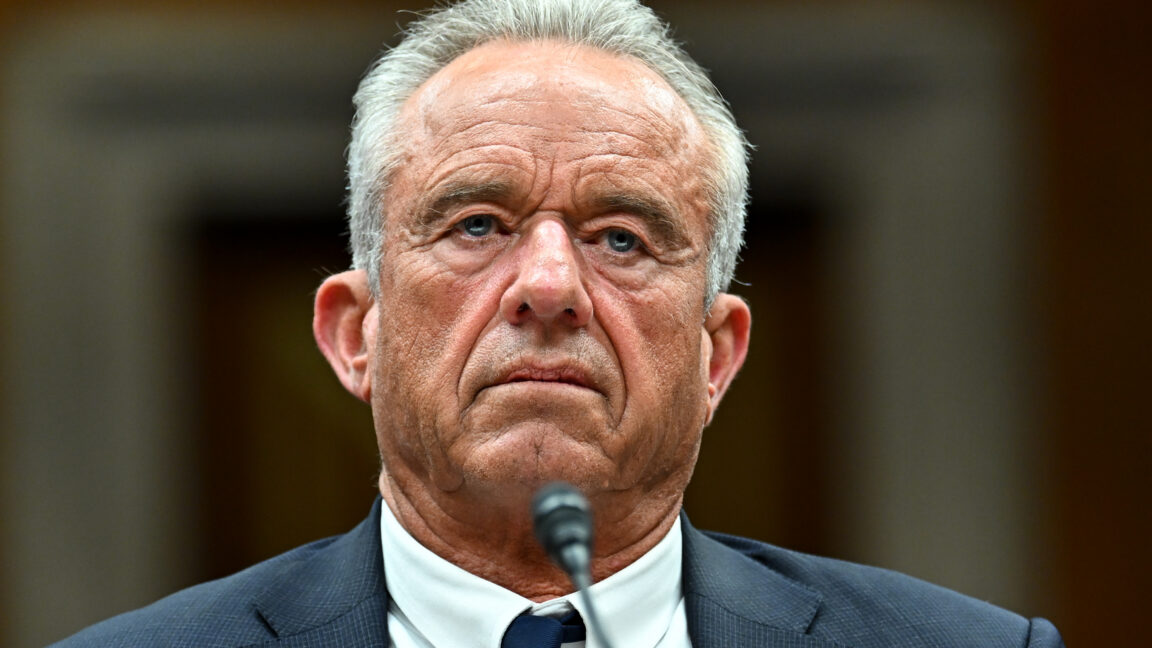
At a Make America Healthy Again event Tuesday, anti-vaccine Health Secretary Robert F. Kennedy opened a "fireside chat" with Vice President JD Vance on the peculiar topic of artificial intelligence. While MAHA generally coalesces around things like healthy lifestyles and mistrust of drug makers, Kennedy quickly turned to extolling the potential for artificial intelligence, surprising Vance, who said he was expecting to discuss "weight loss and acid, not AI."
Kennedy boasted that the Trump administration is "making it easy for every American to use AI," which he claimed would free us from the "medical tyranny" of doctors and health experts. He suggested Americans should start using AI to get second opinions about medical recommendations, saying AI is "better informed than any doctor in the country." He also suggested that the technology would confirm his misinformation about vaccines and contrarian views on public health guidance.
"We're never, ever again going to be able to be dominated by public officials who tell us trust the experts, because every American will be able to check their own medical advice," Kennedy said.
Kennedy, who has no medical, scientific, or public health experience, then laid out specific examples in which he suggested AI would contradict health and medical experts and vindicate his own views:
"If somebody tells you masks work, trust the experts, AI may tell you otherwise. If somebody tells you social distancing works, trust the experts, AI may correct that. And if somebody tells you that a vaccine will prevent transmission and infection—oh, you need to take it to protect your grandmother—AI may say it actually doesn't do that"
AI may contradict or "correct" experts, but does it actually? We checked—the answer was nope.
When we asked Google's Gemini: "Do masks work to prevent spread of infectious diseases?"
The AI chatbot responded (including its emphasis): "Yes, masks work to reduce the spread of respiratory infectious diseases, operating primarily as physical barriers to outgoing and incoming infectious particles. Their real-world effectiveness depends heavily on mask quality, fit, and population-level adherence."
ChatGPT offered a similar answer, responding: "Yes. Masks can reduce the spread of some infectious diseases, particularly respiratory infections transmitted through droplets and aerosols."
Chatbots provided similar affirmative answers to the question of whether social distancing works at preventing infectious diseases. "Yes, social distancing is an effective public health measure for reducing the transmission of infectious diseases, particularly respiratory pathogens," Gemini responded.
For the question, "Can vaccines prevent transmission and infection?" they provided almost identical results again.
"Yes," ChatGPT responded. "Vaccines can prevent both infection and transmission, but the degree of protection varies by vaccine and disease."
"Yes," Gemini echoed, "vaccines can prevent both infection and transmission, but how effectively they do so depends on the specific vaccine and pathogen."
The answers are in line with the opinion of experts, including the caveats, knocking back Kennedy's suggestion that AI would immediately play into his dangerous views. Still, they don't back up Kennedy's claim that they're "better informed" than actual doctors. There are plenty of examples and data indicating that AI cannot be trusted over expert clinicians with health guidance—and can be dangerous when it is.
Kennedy noted AI has "some downsides." But it also quoted Sam Altman, the CEO of OpenAI, the developer of ChatGPT, as saying, "It would be malpractice for a doctor to make a diagnosis or to make a prescription without at least checking AI."
Kennedy's unexpected praise for AI makes more sense in the context of this specific MAHA event, which was held at the swanky Waldorf Astoria in Washington, DC. It was sponsored, in part, by AI companies OpenAI and Anthropic. Counter to MAHA's previous mistrust of industry and opposition to corporate capture, other sponsors for the MAHA summit included Walmart and Grail, which The New York Times pointed out has an application for a cancer screening blood test pending at the Food and Drug Administration.
Bloomberg Law reported that sponsorship packages for the summit were being sold for up to $300,000, which included a guaranteed speaker slot, input into the panel makeup, and a private group dinner with Kennedy and Mehmet Oz, head of the Centers for Medicare & Medicaid Services.
The agenda included executives from huge health insurance companies, UnitedHealth and Elevance. There were also drug makers, a panel on psychedelics, and an executive from Hims & Hers, a direct-to-consumer telehealth company.
The nature of the event has many MAHA leaders feeling betrayed. Robert Malone, a fringe scientist and previous Kennedy ally, blasted the event in a newsletter. "The incestuous nature of MAHA is becoming harder to ignore, and the conflicts of interest seem to multiply by the day," Malone wrote. "MAHA was supposed to expose the revolving door between money, industry and government, not build its own."
An Argentinian-American writer and immigration advocate recently sued the federal government, demanding that it delete data that he believes was copied off of his phone when he re-entered the United States earlier this month.
According to the seven-page complaint, Thomas Kennedy said that a Customs and Border Protection agent at Miami International Airport physically searched his bags, questioned him about his books and magazines, and then demanded that he hand over his phone.
“[The agent] threatened me, saying that if I didn’t give him my phone, my interrogation was going to take much longer and they could retain my phone indefinitely,” Kennedy wrote. “I felt like I had no choice, so I handed my phone to the CBP agent.”
The agent took the phone away and only returned after approximately 45 minutes, during which Kennedy believes that data on the phone was copied. He was then released with no charges.
The activist says there is a significant amount of sensitive personal and professional information on his phone, and he is now seeking that the government delete this data.
He collaborates with multiple nonprofit groups, including the Florida Immigration Coalition, Amnesty International and the Community Justice Project. He now believes that he was targeted for this work, in part because he was asked repeatedly what he did for a living and if he was an immigration attorney.
"I believe CBP flagged me because of my organizing and political work around immigrants' rights in Florida," he wrote in his court filing. “This isn't the first time that law enforcement targeted and harassed me because of my political viewpoint: in 2021, after speaking out against Governor [Ron] DeSantis, the Miami Police were surveilling me and barring me from press conferences."
Federal courts have long-recognized a “border exception” to the Fourth Amendment of the US Constitution, where people, bags, and electronic devices can be searched without a warrant.
Kennedy’s story is reminiscent of a 2017 incident at San Francisco Airport, where a local artist explained to Ars how border agents there allegedly threatened to “be dicks” if he did not hand over his phone.
On its website, CBP states that it can copy such data “if there is probable cause to believe that the information contains evidence of a violation of law that CBP is authorized to enforce or administer” or “if the information relates to immigration, customs, or other enforcement matters.”
CBP says that such searches of electronic devices are very rare.
“In [Fiscal Year] 2025, out of the over 419 million travelers CBP processed at ports of entry, CBP only searched the electronic devices of 55,318 international travelers,” the agency wrote, or 0.0013%.
Still, Kennedy is angry about what happened to him.
“CBP shouldn’t have been able to confiscate my phone, let alone copy its contents,” he wrote in the complaint. “I believe they did so to suppress my political speech.”
The case was first reported by the Miami New Times.
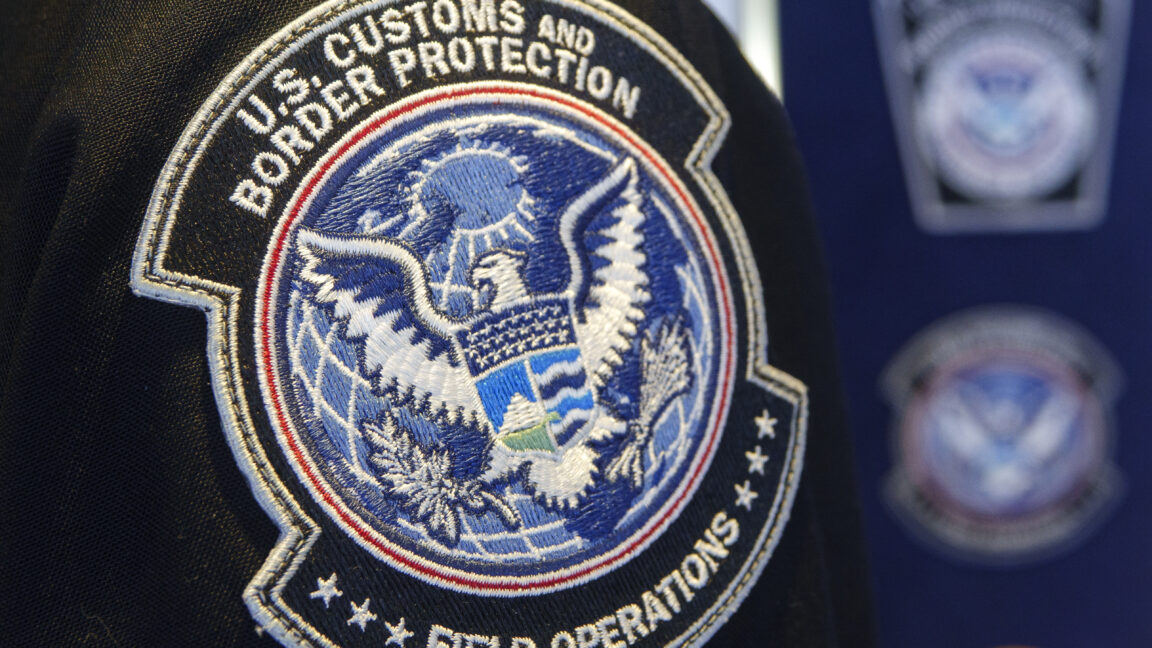
After a nearly monthlong delay, states are now able to order this season's COVID-19 vaccines through a federal program that provides free immunizations to low-income children, the US health department says. Trump officials have still not provided a clear explanation for the delay, raising concerns about meddling from anti-vaccine Health Secretary Robert F. Kennedy Jr.
On Wednesday, Ars Technica reported that the Centers for Disease Control and Prevention had still not opened ordering for 2026–2027 COVID-19 vaccines through the Vaccines for Children program. That was despite the vaccines having been approved by the Food and Drug Administration in late August.
The Department of Health and Human Services (HHS) told Ars on Wednesday that “CDC has not yet finalized procurement decisions" for the shots. The department's statement further suggested Trump officials were questioning whether children should receive them. "HHS and CDC are committed to responsible stewardship of taxpayer resources and to ensuring that vaccines purchased through federally funded programs are appropriate for the populations those programs serve," the department said.
However, The Washington Post reported late Wednesday that ordering was opening. An unnamed source told the Post that part of the reason the vaccine ordering was held up was a delay in finalizing the CDC’s clinical guidance, which is written for health care professionals and public health officials. The guidance reportedly needed to be reviewed by an external expert.
The Post also reported that CDC career officials had previously finished preparations for making the vaccines available. All Trump officials needed to do was essentially push a button to open ordering, sources said. Further, a spokesperson for the Minnesota Department of Health suggested to the Post that CDC leadership was behind the hold, saying the state had been told "that CDC leadership approval is needed before distribution of the vaccine can begin."
In a response to Ars on Thursday, HHS again did not respond to questions about what caused the delay or how it was resolved. The department did, however, confirm that ordering for COVID-19 vaccines is now open.
The unexplained delay comes after Kennedy has, for years, attacked and tried to block access to COVID-19 vaccines. He has falsely called them the "deadliest vaccine[s] ever made," and petitioned the FDA to withdraw and bar approval for the shots. Last year, as health secretary, he unilaterally revoked the CDC's universal recommendations for the vaccines.
An order from a federal judge in March halted other changes Kennedy and his allies had made to CDC vaccine recommendations. That leaves the CDC's current recommendations for COVID-19 vaccines where they were in July 2025. At that point, the vaccines were recommended for children, 6 months to 17 years old, who are moderately to severely immunocompromised. Healthy children in that age group were recommended to obtain them through shared clinical decision-making—in other words, by talking with a pharmacist or doctor.
The newly approved CDC clinical guidance had an update added yesterday saying: "Because of legal uncertainties and inquiries, the CDC states the recommendations for COVID-19 vaccination from the July 2025 immunization schedule remain in effect for the 2026-2027 respiratory illness season."
Still, those recommendations differ from those of leading medical groups. Their recommendations for this year's fall vaccines say that all infants 6 months to 23 months old should get vaccinated against COVID-19. Children 2 to 18 years old should be vaccinated if they are at higher risk or if they desire to be vaccinated.